As an Amazon Associate this site earns from qualifying purchases.
Solar Generators for Travel Trailers (2026 Guide)
Quick answer: For a travel trailer, the practical dividing line is whether the unit can run 120V appliances or only charge gadgets. Of the kits below, the Jackery Solar Generator 1000 v2 with 200W panel is the only one with enough AC output (1,500W, 3,000W surge) and capacity (1,070Wh) to be treated as trailer-scale power rather than a device charger. Everything smaller is a supplement to your trailer's existing battery, not a replacement for it.
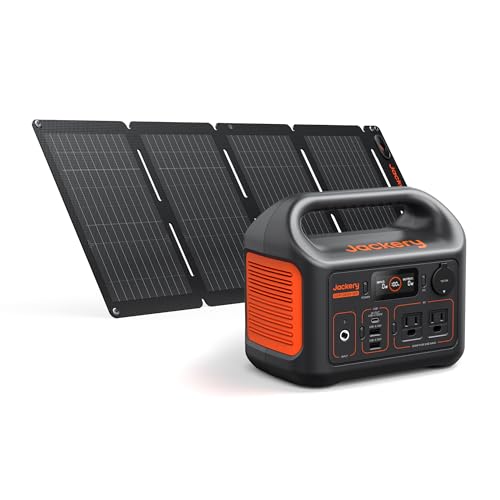
- Ultra-Lightweight: Weighing only 7.5 lbs, the new Explorer 300 is 17% lighter than the industry average for its class. The sleek, integrated handle design makes it effortless to
- Versatile Power for 6 Devices: Equipped with 2 AC outlets, a 100W USB-C PD port, 2 USB-A ports, and a 120W car port. With a 300W rated output (600W peak surge), it easily handles
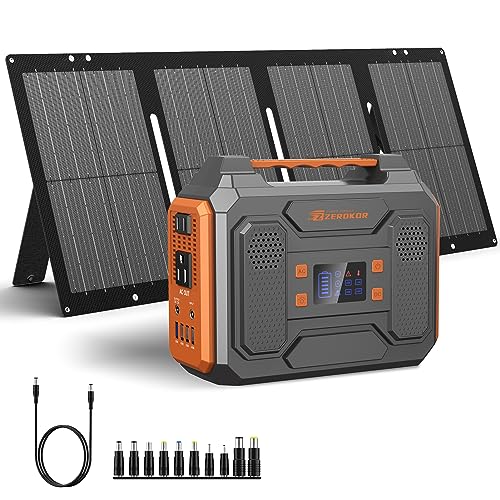
- Portable Generator with 60W Solar Panel Included: with a big battery pack, ZeroKor 300W solar powered generator are powerful enough to charge
- Multiple Charging outlets for camping gear with SOS Flashlight: with 2* 300W Max wall AC outlets, 1* DC port (9V-12.6V/10A max ), 3* 5V/3A Max USB ports, 1*quick charge USB port
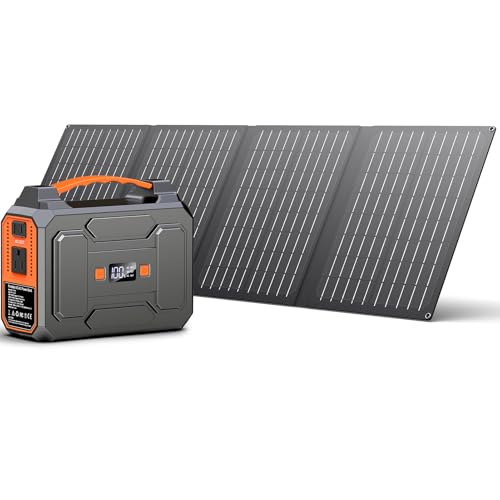
- SOLAR POWERED GENERATOR WITH PANELS INCLUDED: Apowking portable solar panels 40W performances better even under the condition of insufficient light thanks to its 20.5% high
- PORTABLE POWER STATION WITH LARGE CAPACITY: This portable power station with solar panel 146Wh/39600mAh is powerful enough to charge your devices like laptops, phones, tablets
Specifications
| Jackery 1000 v2 + 200W | Jackery 300 + 40W | ZeroKor 300W + 60W | EcoFlow TRAIL 300 DC | Apowking 100W + 40W | |
|---|---|---|---|---|---|
| Price | $699.00 | $379.00 | $169.97 | $143.10 | $113.99 |
| Capacity | 1,070Wh | 292Wh | Not stated | 288Wh | 146Wh / 39,600mAh |
| AC output | 1,500W, 3,000W surge | 300W rated, 600W peak | 2 outlets, 300W max | None (DC only) | 100W, 200W peak |
| Weight | 23.8 lbs | 7.5 lbs | Not stated | Not stated | 3.3 lbs |
| Battery type | LFP, 4,000 cycles to 70% | LiFePO4, 4,000 cycles to 70% | Not stated | Not stated | Not stated |
| AC outlets | 3 (pure sine wave) | 2 | 2 | 0 | 2 |
| USB-C | 2 (100W PD) | 1 (100W PD) | 1 quick-charge USB | 2 (PD3.1, 140W in/out) | 1 (QC 3.0, shared port) |
| USB-A | 1 | 2 | 3 (5V/3A) | 2 (12W) | 2 (5V/3.1A) |
| 12V car port | Yes | Yes (120W) | Yes (9–12.6V/10A) | Yes (10A) | Yes (9–12.6V/10A) |
| Panel included | 200W | 40W | 60W | Sold separately | 40W (20.5% efficiency) |
| Stated solar recharge | 80% in 6h (200W panel) | 80% in 7.5h (40W); 80% in 2.8h (100W) | Not stated | Not stated | Not stated |
| Other charging | 1h emergency via app, 1.7h default, 3h w/ 600W alternator charger | Not stated | AC wall, 12V carport, solar w/ MPPT | Not stated | Not stated |
| Light | LED lights | Not stated | Flashlight, reading + SOS modes | Not stated | Dual LED, 3 modes |
The honest framing before you spend anything
A "solar generator" is a battery in a box with an inverter and a solar input. That's it. It does not know or care that it's in a travel trailer, and none of these units wire into your trailer's 12V system or shore power inlet — you plug things into them.
So the real question isn't "which one is good," it's "what am I plugging in?" A CPAP, a laptop, a fan, and phone charging is a very different load than a residential fridge or a rooftop AC. The specs below are the whole basis for anything I say here; where a manufacturer doesn't publish a number, the table says so.
Who the Jackery 1000 v2 kit is for
Buy this if you actually need 120V power away from hookups. The 1,500W continuous rating with a 3,000W surge is the spec that separates it from everything else here — Jackery lists AC units, fridges and electric pots among what it can power. In trailer terms that means a compressor fridge on inverter, a coffee maker, a microwave in short bursts, or CPAP plus charging overnight without stress.
The 1,070Wh capacity is the other half. Roughly, that's a night of CPAP with a healthy margin, or a couple of days of laptop-and-phone use, or a few hours of a moderate appliance. The 200W panel gets it to 80% in about six hours of good sun, which is a realistic "top it up during a travel day at camp" cadence rather than a wishful one.
The LFP chemistry matters for RV life specifically: 4,000 cycles to 70% capacity means daily boondocking use for years, not a battery you nurse. The 600W alternator charging path is also genuinely useful if you're driving between sites — you arrive full instead of hoping for sun.
Who should skip it
Skip the 1000 v2 if:
- You only need to keep gadgets alive. Phones, tablets, a laptop, a camera, a fan. Paying $699 and hauling 23.8 lbs for that is silly when a 300Wh unit does it.
- You already have a decent lithium house battery and inverter. You'd be buying a second, smaller version of what's parked under your dinette.
- You want to run rooftop AC for hours. A 1,070Wh battery will not do that regardless of what the inverter is rated for. Surge capability and runtime are different problems.
- Weight and storage are tight. 23.8 lbs plus a 200W folding panel is a real chunk of your cargo allowance and basement space.
Trade-offs worth being clear-eyed about
Capacity is the constraint, not output. Every one of these is a small battery by RV standards. Even the largest here is roughly what a single 100Ah lithium house battery holds.
Included panels are usually undersized. The 40W panel bundled with the Jackery 300 kit needs about 7.5 hours to reach 80%, versus 2.8 hours with a 100W panel — Jackery publishes both numbers, which is refreshingly honest. Budget for a bigger panel later if solar is your primary refill.
DC-only is a real limitation. The EcoFlow TRAIL 300 DC has no AC outlets at all. EcoFlow's own framing is "90% of your essential outdoor gear" — great for a 12V cooler and USB-C laptops, useless for anything with a wall plug.
Watch the fine print on small units. ZeroKor explicitly warns that appliances over 300W may damage the unit, and calls out coffee makers, hair dryers and water pumps by name. Believe the warning.
Unstated specs are a yellow flag. Several of these kits don't publish weight, cycle life or battery chemistry. That's not proof of a bad product, but it's information you're not getting.
What to check on the listing before you buy
Listings change constantly, so verify at the moment of purchase:
- The price and the bundle. Every one of these is sold in multiple configurations. Confirm the panel wattage in the title matches the one in the cart — panel size drives recharge time more than anything else.
- The variant. Capacity and panel options share a listing. Check the selected swatch, not the headline.
- Warranty terms and what the seller is. Sold-by and shipped-by matter for RV gear you'll be filing a claim on from a campground three states away.
- Recent buyer reviews and Q&A. Read them yourself, and filter for people describing RV or trailer use specifically. Don't take my word for the sentiment — go look.
- Whether the panel connector matches. Apowking notes its 40W panel ships with 10 DC connectors for cross-brand compatibility; most others assume you stay in-brand.
Consider instead if…
- You want AC outlets in a package you can carry one-handed — the Jackery Solar Generator 300 at 7.5 lbs and 292Wh gives you two AC outlets and a 100W USB-C PD port, with the same 4,000-cycle LiFePO4 chemistry as its bigger sibling. It's the sane pick for a couple who just wants devices covered.
- Budget is the deciding factor and you want a panel and AC in the box — the ZeroKor 300W kit with 60W panel is $169.97 with built-in MPPT, two AC outlets and an SOS flashlight. Just respect the 300W ceiling.
- Your loads are all USB-C and 12V — the EcoFlow TRAIL 300 DC has 140W in and out on USB-C PD3.1, which will run a modern laptop and refill fast. No inverter means no inverter losses.
- You want the lightest possible backup for a small trailer or tent overflow — the Apowking 100W kit weighs 3.3 lbs with 146Wh and includes a 20.5%-efficiency monocrystalline 40W panel. It's a glorified power bank with AC outlets, and priced accordingly at $113.99.
FAQ
Can any of these run my trailer's air conditioner? The Jackery 1000 v2 lists AC units among what its 1,500W/3,000W-surge inverter can power, but 1,070Wh is the limiting factor for runtime. Treat it as short-duration capability, not overnight cooling.
Will these charge from my truck while driving? All five have a 12V car port for output. Jackery specifically documents a 600W alternator charger reaching a full charge in about three hours on the 1000 v2 — that's the only alternator input spec published across these kits.
Do I need to disconnect my trailer battery to use one? No. These are standalone units; you plug appliances directly into them. They don't integrate with your trailer's electrical system.
How long will the battery last before I'm buying another one? Both Jackery units publish 4,000 charge cycles to 70% remaining capacity, which they translate to 10+ and 11+ years respectively. The other three don't state cycle life — factor that into the price difference.