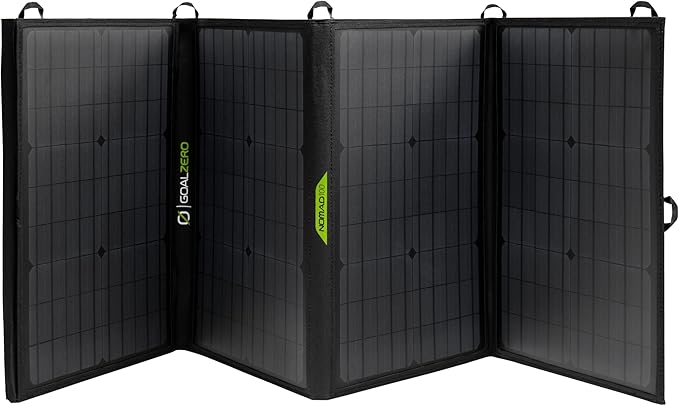
Last Updated: July 9, 2026
If you landed here mid-outage, wondering which portable power station is best for keeping a CPAP running overnight, a fridge cold, or a phone charged when the utility company goes dark, you are not alone. A recent r/preppers thread blew up with exactly this frustration: a reader stuck in a storm-related blackout whose current unit only ran a CPAP for three to four hours and recharged painfully slowly off solar. The comment section turned into a heated debate about lithium chemistries, solar input ratings, and which brands actually deliver on their advertised watt-hours.
We have been reviewing portable power stations at PortableScout for years, and the questions people are asking in 2026 are noticeably different from what they asked even eighteen months ago. LiFePO4 batteries have gone mainstream, prices have dropped, and solar recharge speeds have finally reached the point where a single sunny day can actually top off a mid-sized unit. This guide walks through what to buy, what to skip, and how to think about capacity, solar input, and UPS behavior so you never have to guess again.
TL;DR / Quick Answer
For most people dealing with medical devices like a CPAP during multi-day outages, the BLUETTI Elite 30 V2 (288Wh, LiFePO4, 10ms UPS) at around $199 is the sweet spot for price, chemistry, and reliability. If you need bigger runtime and want the panels included, the OSCAL PowerMax 3600SE bundle with two 200W panels covers whole-room backup. Pair a smaller station with a Renogy 200W foldable panel for the best price-per-watt solar setup.
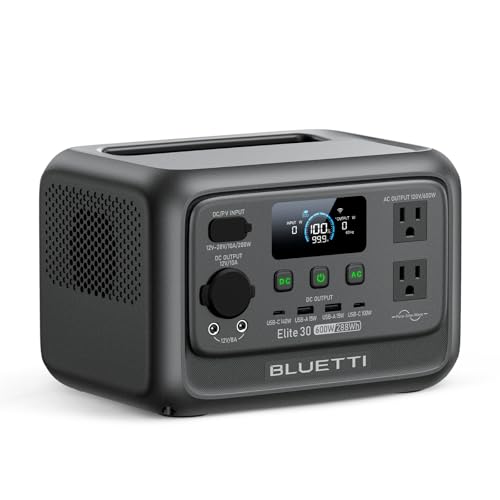
- [288Wh On-the-Go Power] - Only 9.4 lbs lightweight, carry it anywhere during storms! 288Wh capacity meets daily & outdoor needs—camping, road trips, beach visits, or home
- [600W Continuous & 1500W Surge Power] - Get a full 600W output—twice as much as others. When you need serious power, activate Power Lifting Mode for 1500W power (vs. the typical
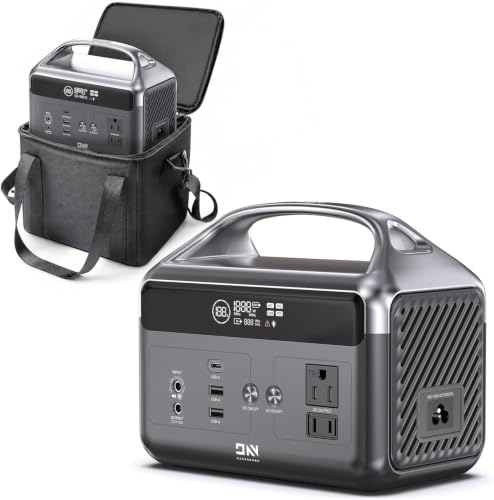
- 【192Wh Capacity, 300W Pure Sine Wave Output】This portable power station delivers a reliable 300W (600W surge) output, perfect for phones, tablets, laptops, fans, CPAP machines
- 【Double the Life with LiFePO4 Safety】Unlike standard lithium batteries, our LiFePO4 chemistry is incredibly stable and heat-resistant. It can safely withstand high temperatures up
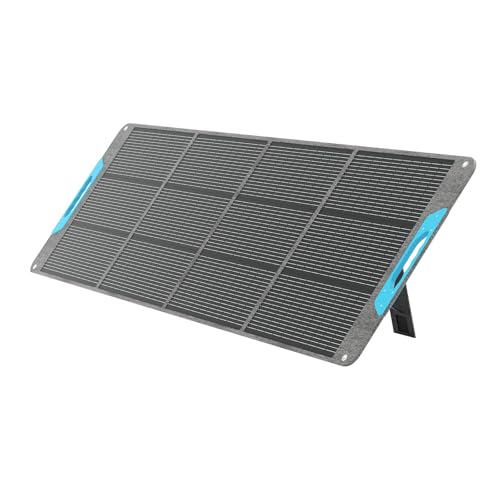
- [Industry-Leading 25% Efficiency] 16BB N-Type cells deliver more power from the same sunlight, supporting RV trips, camping, blackout backup, and off-grid use in limited or cloudy
- [Lightweight & Magnetic Design] Weighing 13.89 lb and folding to 23.72 x 22.99 x 1.97 in, this 200W panel stores at backpack size with a magnetic closure for SUVs, RVs, and
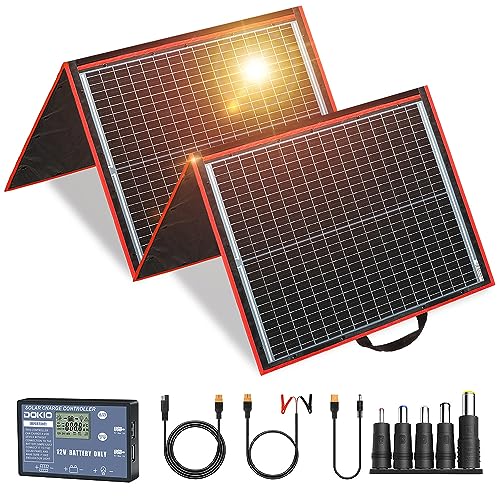
- 【COMPACT & TRAVEL-READY】 Folds down to 19.3x20.9x1.1in and just 7.3lb—light enough to pack, carry, and set up solo. Perfect for RVs, vans, camping, or backup power
- 【LONG CABLE, COOLER & SAFER】 9.8ft (3m) cable lets you park the panel in full sun while your controller or power station stays shaded—better cooling, safer use, and more flexible
Why This Question Keeps Coming Up
Storm season, aging grid infrastructure, and the rising number of people who rely on CPAP machines or home medical equipment have made portable power stations one of the most-discussed prepping topics of the year. Search interest for phrases like which is the best portable power station and what portable power station is best has climbed steadily since 2023, and every hurricane, ice storm, or wildfire evacuation pushes it higher.
The Reddit thread that inspired this article is a perfect snapshot of the real-world problem. The original poster was not asking about camping trips or tailgates. They needed a device that would keep a medical machine running through a multi-night outage and recharge fast enough from a portable solar panel to buy them another night. That is a very different use case from powering a laptop at a campsite, and the wrong purchase can be genuinely dangerous.
What Changed in 2026
Two things. First, LiFePO4 (lithium iron phosphate) chemistry is now standard on almost every serious unit under $2,000. It runs cooler, lasts thousands of cycles instead of hundreds, and is dramatically less prone to thermal runaway than older NMC packs. Second, solar input ratings on mid-sized stations have doubled. Units that used to cap at 200W of solar input now regularly accept 400W or more, which means a cloudy day is no longer a death sentence for your battery reserve.
Which Portable Power Station Is Best for Camping, Outages, and CPAPs
Below are the six units we currently recommend. Each pick is matched to a specific buyer profile, and we call out the trade-offs honestly. None of these are perfect; the right one depends on what you actually need to power and for how long.
BLUETTI Elite 30 V2 — Best Overall for CPAP and Small Outages
The Elite 30 V2 is the unit we would hand to the original Reddit poster without hesitation. It delivers 600W of continuous output (with a 1500W Power Lifting mode for higher-draw appliances), 288Wh of LiFePO4 capacity, and a 10ms UPS switchover that matters more than most buyers realize. If your CPAP is plugged into the station and the grid drops, the machine will not even notice.
The LiFePO4 chemistry means you can leave this thing on standby for years without meaningful degradation, and BLUETTI rates it for thousands of cycles. At $199, it is one of the best price-to-capacity ratios on the market right now.
Trade-off: 288Wh is modest. A typical CPAP without heated humidifier draws around 30 to 60 watts, which should get you six to nine hours on a full charge — better than the Reddit user's current setup, but not a multi-night solution by itself. Pair it with a solar panel or plan to recharge from a car inverter.
LIBRIDS C600 — Best for Fast Recharge and Multiple Devices
The LIBRIDS C600 pushes 640Wh of LiFePO4 capacity, 600W continuous (1200W peak), and — this is the headline feature — a 1.5-hour fast charge from wall power. If you can grab a couple of hours at a friend's house or a shelter with power, you can walk out with a full battery.
It also carries 10ms UPS switching and eight output ports, including four AC outlets. For a household running a CPAP plus a phone, a router, and a small fan, this is a very livable setup.
Trade-off: At $219.99 it is only marginally more expensive than the BLUETTI, but the brand is less established. If long-term warranty support matters to you, that is worth weighing.
DaranEner 300W — Best Budget Pick Under $150
If you are trying to solve the immediate problem cheaply, the DaranEner 300W at $125.99 is a legitimate option. It offers 192Wh of LiFePO4 capacity, 300W continuous output with a 600W surge, and a 2-hour fast charge. Two AC outlets, a 60W USB-C PD port, and a built-in LED light round out a genuinely useful little box.
Trade-off: 192Wh is a small tank. This is a bridge device — good for a night of CPAP use if your machine is efficient, or for keeping phones and lights alive during a shorter outage. Do not expect it to run a fridge for any meaningful length of time.
OSCAL PowerMax 3600SE — Best Whole-Room Backup Bundle
If the Reddit poster's real problem is that their entire setup is undersized, this is the honest upgrade path. The OSCAL PowerMax 3600SE ships with 3600Wh of LiFePO4 capacity, 1800W AC output, and — critically — two 200W solar panels included in the box. Solar input is rated at 1600W, meaning you can add more panels later and actually use them.
At $1,699 for the bundle, this is not a small purchase. But when you price out a comparable capacity station plus 400W of quality panels separately, the bundle math holds up.
Trade-off: Weight and size. This is not something you grab on your way out the door. It lives in a garage or utility closet and gets wheeled out when needed.
Renogy 200W Foldable Panel — Best Standalone Solar Add-On
This is our top pick for anyone who already owns a decent station and just needs faster solar input. The Renogy 200W folds up for transport, uses 25% high-efficiency N-type cells, and includes an MC4 connector plus a USB-C PD 45W output for charging phones and tablets directly.
Adjustable kickstands and plug-and-play operation mean you can set it up in minutes. At $206.99, it is priced competitively against no-name panels that often underdeliver on their rated wattage.
Trade-off: 200W is the theoretical maximum in perfect sun. In real conditions expect closer to 130 to 160W. That is still substantially faster than the 60 to 100W panels that come bundled with many entry-level stations.
DOKIO 150W Foldable Kit — Best Ultra-Portable Solar
For readers who need the lightest, most portable solar option, the DOKIO 150W folds down to 21x20 inches and weighs 7.3 pounds. It ships with a standalone controller and USB output, and it is compatible with most 12V batteries and power stations.
Trade-off: 150W is the ceiling. For a mid-sized station like the BLUETTI Elite 30 V2, that is fine and will keep you topped up during daylight. For anything above 500Wh capacity, plan on either two of these or stepping up to the Renogy 200W.
Who This Is For
The Medical-Device Household
You or someone in your home relies on a CPAP, BiPAP, oxygen concentrator, or medication refrigeration. For you, capacity and UPS behavior matter more than portability. Look at the BLUETTI Elite 30 V2 as an entry point and the OSCAL PowerMax 3600SE if you need multi-night autonomy. The 10ms UPS switchover on both units is not marketing fluff — for a CPAP user, it means uninterrupted therapy when the grid drops mid-sleep.
The Weekend Camper and Van-Lifer
You are asking which portable power station is best for camping, and your priorities are weight, solar input, and enough capacity to run a fan, lights, a laptop, and a small cooler. The LIBRIDS C600 paired with the DOKIO 150W panel is a strong lightweight combo. The Renogy 200W is a step up if you have a slightly bigger station.
The Prepper Building a Layered System
You are not looking for one device — you are building a stack. A small unit (DaranEner 300W) for grab-and-go, a mid-sized station (BLUETTI or LIBRIDS) for household essentials, and a larger platform (OSCAL 3600SE) for extended events. Layering means no single failure leaves you dark.
What to Look For: A Real Buyer's Guide
Battery Chemistry: LiFePO4 or Skip It
This is the single most important spec in 2026. Lithium iron phosphate (LiFePO4) batteries offer roughly 3,000 to 6,000 charge cycles at 80% depth of discharge, compared to 500 to 1,000 for older NMC chemistry. They also run cooler and have a substantially lower risk of thermal runaway. Every station we recommend above uses LiFePO4 for good reason. For more on how these battery cells behave, Wikipedia's overview of LiFePO4 batteries is a solid primer.
Capacity (Wh) vs. Output (W)
These get confused constantly. Watt-hours (Wh) tells you how much energy is stored — think of it as fuel tank size. Watts (W) tells you how fast you can pull that energy out — think of it as engine size. A 288Wh station can theoretically run a 30W CPAP for about 9 hours, but only if the output rating (600W here) is high enough to handle the device's startup surge.
UPS Switchover Time
For anyone using a station as backup power, UPS switchover time is critical. A 10ms transition (as on the BLUETTI Elite 30 V2 and LIBRIDS C600) is essentially seamless for medical devices, routers, and computers. Anything over 20ms will cause sensitive electronics to reset.
Solar Input Rating
Two numbers matter: maximum solar input (in watts) and voltage range. A station rated for 200W solar input will not charge any faster if you connect a 400W panel — the extra wattage is wasted. Match your panel to the station or step up to a station with higher input if you plan to expand.
Charge Time from Wall Power
Fast charging is genuinely useful during rolling outages. The LIBRIDS C600's 1.5-hour full recharge is a real advantage if you occasionally get short windows of grid power. The DaranEner's 2-hour charge is similarly practical.
Build Quality and Cooling
Look for stations with active cooling (a small internal fan), proper venting, and a metal or reinforced-composite chassis. Consumer safety standards like UL 9540 for energy storage systems exist for a reason — cheap units cut corners here.
Port Selection
Count the AC outlets, USB-A, USB-C PD ports, and the always-useful 12V DC output. If you plan to run multiple devices simultaneously, more ports means fewer power strips daisy-chained into the same outlet.
Where to Buy a Portable Power Station
Readers ask where can I buy a portable power station constantly, and the honest answer in 2026 is: Amazon for selection and return policy, direct from the manufacturer for warranty support, and big-box stores like Costco or Home Depot for larger units where you want to see the physical size before committing.
Amazon's main advantage is the 30-day return window. If a station arrives DOA or fails to hit its rated capacity in your first week of testing, you can send it back. That safety net matters more with newer brands.
What About South Africa and Other Markets
We get a lot of readers asking which portable power station is best in South Africa and other regions dealing with load shedding. The core recommendations translate, but pay attention to plug type and voltage — most stations sold in North America are 110V and will not natively power 220V-240V appliances without a converter.
What We Don't Recommend
Ultra-Cheap NMC Units Under $100
You will see them everywhere: 300Wh stations for $79, unbranded, with vague specs. These almost always use older lithium chemistries, have inflated capacity ratings, and lack any meaningful safety certification. For a device you are trusting with a medical machine, this is not the place to save $50.
Gas Generators as a Backup Alternative
Some commenters in the original Reddit thread pushed gas generators as cheaper. They are — up front. But they cannot be run indoors, they require ongoing fuel purchases, they are loud enough to draw unwanted attention during regional outages, and they cannot silently power a CPAP overnight in a bedroom. Different tool, different job.
Oversized Panels for Undersized Stations
Buying a 600W panel to feed a station with 200W solar input is throwing money away. Match the panel to the station or step the station up first.
Frequently Asked Questions
Which portable power station is best for running a CPAP overnight?
The BLUETTI Elite 30 V2 is our top pick for CPAP users because of its 10ms UPS switchover, LiFePO4 chemistry, and 288Wh capacity. A typical CPAP without heated humidifier will run 6 to 9 hours on a full charge. If you need multi-night autonomy without solar recharge, step up to a larger unit like the OSCAL 3600SE.
How long will a portable power station run a refrigerator?
A full-size fridge draws around 100 to 200W when the compressor cycles on, but only for short bursts. A 500Wh station will typically keep a fridge cold for 6 to 12 hours if you keep the door closed. A 3600Wh unit like the OSCAL can run one for one to two days.
Can I recharge a power station from my car?
Yes, almost every station on our list supports 12V DC input from a standard car cigarette lighter socket. Charging is slow — expect 6 to 10 hours for a full recharge on mid-sized units — but it is a reliable fallback during extended outages.
Which portable power station to buy if I have never owned one?
Start with the BLUETTI Elite 30 V2 or the DaranEner 300W. Both are under $220, use LiFePO4 chemistry, and cover the basics without overwhelming a first-time buyer. You can always add a larger station later once you understand your actual power needs.
Do I really need a LiFePO4 battery?
In 2026, yes. The price gap between LiFePO4 and older chemistries has essentially closed, and the cycle life and safety improvements are substantial. There is no reason to buy a non-LiFePO4 station unless you find a legitimate closeout deal on a proven brand.
How much solar wattage do I actually need?
A rough rule: match your solar wattage to roughly 50 to 75% of your daily energy use. If you need 500Wh per day and expect five hours of usable sunlight, a 150 to 200W panel will keep you topped up. In practice, real-world output runs 60 to 75% of the panel's rated wattage.
Where to buy a portable power station in an emergency?
If you are actively in an outage, big-box stores like Home Depot, Lowe's, and Costco are the fastest options and often have units in stock. For non-emergency purchases, Amazon and direct-from-manufacturer sites offer better selection and pricing.
Final Thoughts
The Reddit thread that inspired this article ended with dozens of conflicting recommendations, which is why buyers get overwhelmed. The truth is simpler than the comment section suggests: buy LiFePO4, match the capacity to your actual daily use, and pair the station with a solar panel that fits its input rating. Do those three things and you will not regret the purchase.
For most readers dealing with the specific problem in the original post — a CPAP that only runs three to four hours on their current station — the BLUETTI Elite 30 V2 plus the Renogy 200W solar panel is the combination we would buy today. It solves the immediate problem, it is affordable, and it scales with a second panel later if needs grow. Storm season is not slowing down. Better to have the right gear on the shelf before you need it than to be shopping by flashlight during the next outage.
People Also Ask
Best portable power station for CPAP?
See the full breakdown in the article above — we cover this in detail with real-world numbers and product recommendations.
Which portable power station to buy?
See the full breakdown in the article above — we cover this in detail with real-world numbers and product recommendations.
Where to buy a portable power station?
See the full breakdown in the article above — we cover this in detail with real-world numbers and product recommendations.