Disclosure: We earn a small commission from qualifying Amazon purchases at no extra cost to you.
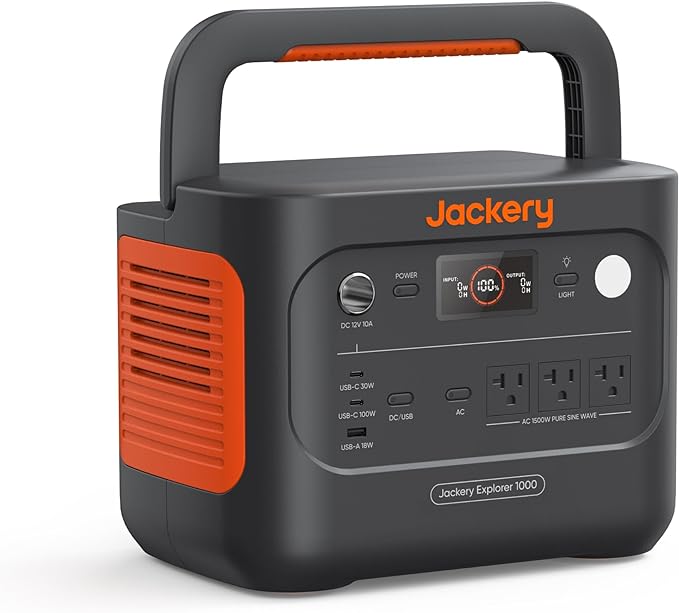
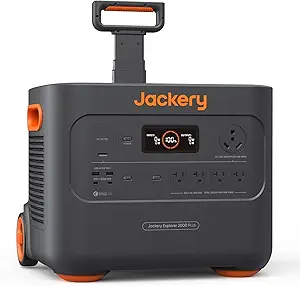
If you're spec'ing a jackery explorer 2000 v2 for induction cooktop class b van conversion in 2026, the short answer is: yes, it works, but only if you respect the wattage ceiling and treat the station as your cooking-and-microwave bank rather than a whole-house battery. The Explorer 2000 v2 delivers 2,042Wh of LiFePO4 storage and a 2,200W pure sine inverter (3,000W with SurgePeak), which is enough to run a typical 1,500-1,800W single-burner induction hob, simmer a meal, and still have headroom for a fan or fridge. Below we walk through power budgets, runtime math, recharge strategy, and the smaller EcoFlow companion units many Class B builders pair with it for non-cooking loads.
Why the Jackery Explorer 2000 v2 fits Class B induction cooking
Class B vans (Sprinter 144, Transit Trail, ProMaster 1500, Revel-style builds) have a hard constraint that Class C and skoolie builds don't: floor space. You usually have one galley cabinet, maybe 18" wide, where the cook surface, sink, and battery have to coexist. A 2kWh portable station that you can lift out for service or sell with the van solves the regulatory and resale headaches of a hardwired 48V LiFePO4 bank. The jackery explorer 2000 v2 for induction cooktop class b van use case works specifically because:
- Inverter sizing matches the load. A 1,800W induction burner on "boil" peaks around 1,800W continuous; the 2,200W inverter handles it with margin and won't trip on the compressor spike from a 12V fridge running on the same circuit.
- LiFePO4 chemistry tolerates the cabin heat a Class B sees in summer better than the NMC batteries in older Jackery models.
- 1.7-hour AC recharge means a 30-minute shore-power top-up at a campground gives you another meal.
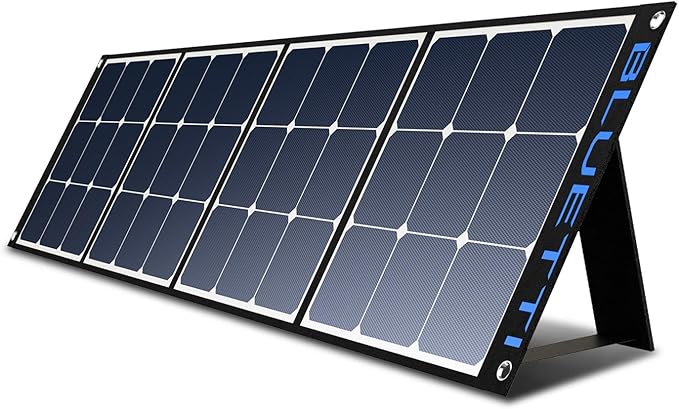
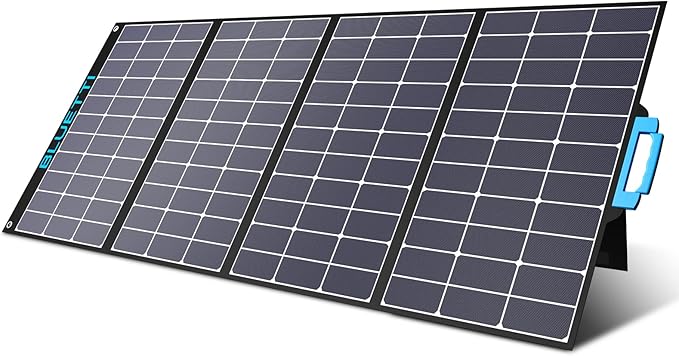
- Solar input up to 1,400W lets two 200W roof panels plus a 200W portable suitcase keep up with daily cooking in summer.
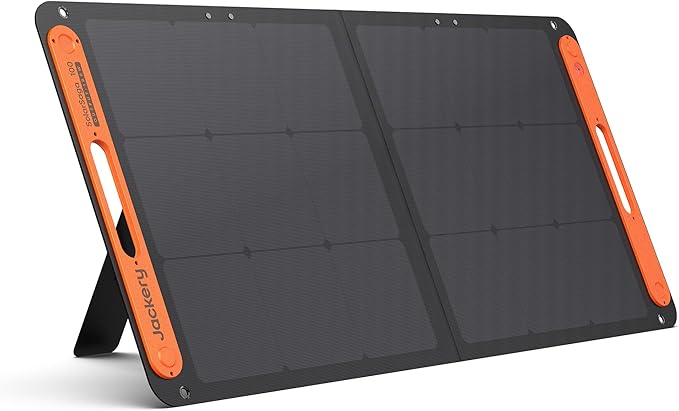
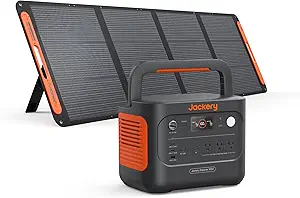
Jackery SolarSaga 100W Bifacial Portable Solar Panel for Explorer 240/300/500/1000/1500 Power Stations, Foldable Solar Cell Solar Charger with USB Outputs for Phones, Rooftops, Out
- 100W monocrystalline solar cells
- 24.3% solar conversion efficiency
- Foldable, IP65 waterproof design
The induction power budget, honestly
An induction cooktop is the single biggest load most van dwellers will ever run off a portable power station. Here's the realistic draw for common 2026 single-burner units:
- Boil setting (P9 / 1,800W): ~1,800W continuous. The Explorer 2000 v2 gives you roughly 60-65 minutes from full to empty at this draw, ignoring inverter losses.
- Sear (1,500W): ~75-80 minutes.
- Simmer (P4 / 600-800W): 2-2.5 hours of stew or rice.
- Keep-warm (200W): 8+ hours.
Real-world cooking is almost never "boil for an hour." A typical one-pot dinner is 4 minutes of boil to heat water, 8 minutes at 1,200W to cook pasta, then 5 minutes of simmer for sauce. Call it 350Wh, or about 17% of the Explorer 2000 v2's capacity. That leaves over 1,600Wh for the fridge, lights, fan, and laptop overnight before you need to recharge.
Where smaller EcoFlow RIVER units fit into a Class B build
Even with a 2kWh primary, most thoughtful Class B builds carry a second, smaller station. The reasons are mundane: you want a separate bank for the 12V fridge so a long cooking session doesn't drain your sleeping-fan reserve; you want a grab-and-go unit for the picnic table; you want redundancy if the big unit's BMS faults 800 miles from a service center. The EcoFlow RIVER series is the natural companion because the units are small enough to live under the passenger seat and recharge in under 90 minutes.
Comparison: companion stations for the Explorer 2000 v2
| Model | Capacity | AC Output | Fast Charge | Best Companion Role |
|---|---|---|---|---|
| EcoFlow RIVER 3 | 245Wh | 300W (600W X-Boost) | ~60 min | Devices, lights, CPAP backup |
| EcoFlow RIVER 3 Plus | 286Wh | Up to 1,200W | ~60 min | Small kettle, blender, fridge isolation |
| EcoFlow RIVER 2 Max | 499Wh | 500W (1,000W X-Boost) | ~60 min | Overnight fridge bank |
| EcoFlow RIVER 2 Pro | 716Wh | 800W (1,600W X-Boost) | ~70 min | Full secondary station, low-watt cooking |
EcoFlow RIVER 2 Pro — the strongest secondary for a Class B
If you're running a jackery explorer 2000 v2 for induction cooktop class b van setup and want a real backup that can also briefly run a 1,500W kettle on X-Boost, the RIVER 2 Pro is the unit to add. 716Wh of LiFePO4 storage is enough to power a 40W 12V fridge for roughly 15 hours, or run the Maxxair fan on medium overnight without touching the Jackery. The 70-minute AC recharge means a coffee-shop stop tops it off. It weighs 17 lbs, fits under a captain's chair, and the UPS-grade pass-through lets you leave a CPAP plugged in continuously. Check the RIVER 2 Pro on Amazon.
EcoFlow RIVER 2 Max — the fridge-only bank
A common Class B mistake is running the fridge off the same station you cook on. The first time you forget to recharge after dinner, you wake up to spoiled food. Dedicating a 499Wh RIVER 2 Max to the 12V fridge isolates that load completely. The 500W AC inverter is plenty for a CPAP, laptop, or LED string lights, and X-Boost handles a 1,000W hair dryer if you need it. Strap it to the wheel well behind the driver seat, run a single 12V cable to the fridge, and forget about it. Check the RIVER 2 Max on Amazon.
EcoFlow RIVER 3 Plus — the under-passenger-seat utility unit
For builders who want a third station for outside use (campsite blender, e-bike charging, the porch lights on the awning) without adding more than 8 lbs, the RIVER 3 Plus punches above its 286Wh weight class with up to 1,200W AC output. It's not a cooking station, but it'll run a 1,000W induction kettle for the 90 seconds it takes to boil enough water for a pour-over. It's the unit you hand to a friend at the picnic table while the Jackery stays in the van running the cook. Check the RIVER 3 Plus on Amazon.
EcoFlow RIVER 3 — the device-only minimum
If your budget is tight after the Jackery purchase, the 245Wh RIVER 3 is the cheapest way to add a second LiFePO4 bank to the van. It won't run a cooktop or microwave, but it'll charge phones, run a 12V fan all night, and serve as a CPAP backup. At under $200 most weeks in 2026, it's an easy add-on. Check the RIVER 3 on Amazon.
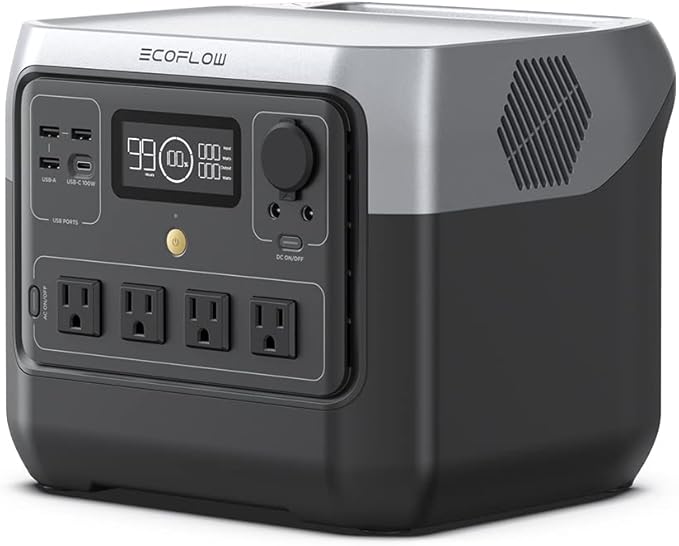
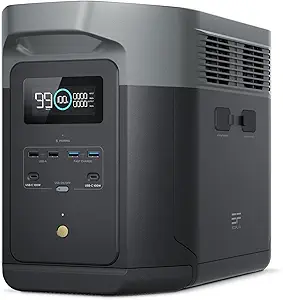
EF ECOFLOW Portable Power Station RIVER 2 Pro, 768Wh LiFePO4 Battery, 70 Min Fast Charging, 4X800W (X-Boost 1600W) AC Outlets, Solar Generator for Outdoor Camping/RVs/Home Use Blac
- 768Wh LFP battery
- 800W AC output (1600W X-Boost)
- Full charge in 70 minutes
Charging the Explorer 2000 v2 in a Class B
Three charge paths matter for van life:
- Alternator charging. The Explorer 2000 v2 accepts up to 12V/10A from the car port, which is painfully slow (about 16 hours from empty). The realistic option is an aftermarket 30A or 40A DC-DC charger feeding a 12V auxiliary, then running the Jackery's car cable to that. Most Class B builders skip alternator charging on the portable and rely on solar plus shore power.
- Solar. Two roof-mounted 200W panels in series feeding a single Anderson connector hit the sweet spot. The Explorer 2000 v2 accepts up to 1,400W solar in, so a 200W portable suitcase laid on the ground at camp adds a third string and gets you to full by mid-afternoon even in shoulder season.
- Shore power. 1.7 hours from 0-100% on AC. If you're plugged in overnight at a campground, you can effectively ignore the battery state entirely.
For a deeper dive on roof solar layouts, see our guide on the best power stations for van life in 2026 and our walkthrough of Class B van electrical system design.
Installation tips specific to Class B vans
- Ventilation. The Explorer 2000 v2's fan exhausts from the rear. Leave 4" of clearance behind the unit and don't bury it in a sealed cabinet. A small 80mm USB fan blowing across the top during cooking sessions adds insurance.
- Mounting. Use a ratchet-strap floor mount rather than rigid bolts. Class B floors flex over washboard roads and rigid mounts crack the case footings over time.
- Cooktop choice. Pick a single-burner induction hob that tops out at 1,800W and offers true 100W simmer steps. Cheaper units jump from 200W to 600W with no in-between, which wastes battery on simmer-heavy meals.
- Cookware. Magnetic stainless or cast iron only. A non-induction-compatible pan will simply not heat, and you'll waste 30 seconds wondering why the burner is beeping at you.
- CO and propane. The whole point of going induction in a Class B is eliminating propane. Don't undermine that by carrying a backup propane stove "just in case" — it defeats the insurance and condensation benefits.
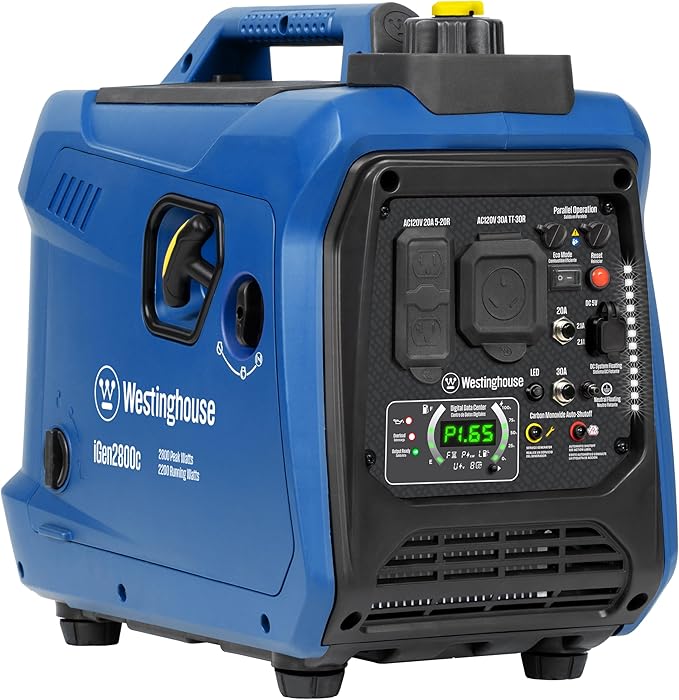
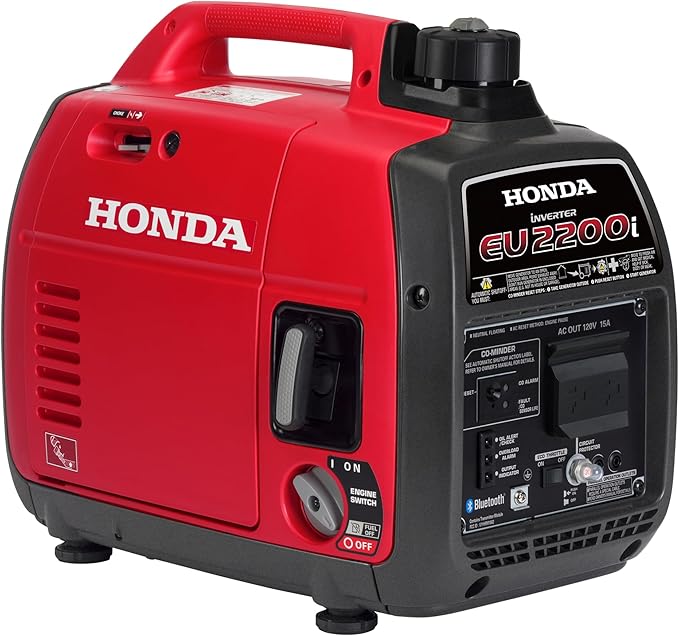
Westinghouse 2800 Peak Watt Super Quiet & Lightweight Portable Inverter Generator, Gas Powered, CO Sensor, Parallel Capable, Long Run Time
- 2500W peak / 2200W running output
- Co-Sense carbon monoxide auto shutoff
- Quiet 53 dB at 1/4 load, gas-powered
When the Jackery is the wrong answer
Two scenarios where you should not use a jackery explorer 2000 v2 for induction cooktop class b van cooking:
- You cook three full meals a day. At ~350Wh per meal, you'll deplete the unit in two days without solar. A hardwired 48V/300Ah bank with a 3,000W inverter is the right tool.
- You want to also run a rooftop AC. The Explorer 2000 v2 can start a 5,000 BTU 12V AC, but you'll get under an hour of cooling. Cooking plus AC requires a larger system.
For everyone else — weekenders, snowbirds, remote workers cooking one hot meal a day — the Explorer 2000 v2 is the right size. Pair it with a RIVER-series secondary for the fridge and overnight loads, and you've built a Class B electrical system that costs less than a single Battle Born install and can leave the van with you when you sell it.
Frequently Asked Questions
Can a Jackery Explorer 2000 v2 actually run a 1,800W induction cooktop?
Yes. The 2,200W continuous inverter has 400W of headroom over an 1,800W burner, and the SurgePeak handles the brief 2,000W+ inrush some cooktops draw at startup. You'll get roughly 60-65 minutes of continuous boil from a full charge, but real cooking sessions rarely exceed 15 minutes of active high-power draw per meal.
How long will the Jackery Explorer 2000 v2 last cooking dinner in a van?
A typical one-pot dinner (boil water, cook pasta, simmer sauce) uses 300-400Wh, or about 15-20% of the battery. You can cook five or six full meals before recharging. Heavy cooking (searing meat plus a long braise) uses 600-800Wh per session.
Do I need a special induction cooktop for a portable power station?
No, but pick a single-burner unit rated 1,800W or less with true variable power steps. Dual-burner cooktops draw 3,000W+ combined and exceed the inverter's continuous rating. Brands like Duxtop, NuWave, and Empava all sell suitable single-burner models under $100.
Can I run the Explorer 2000 v2 induction setup off solar alone?
In summer at lower latitudes, yes. Two 200W roof panels plus one 200W portable in full sun deliver roughly 2,000-2,400Wh per day, which covers cooking plus a fridge plus overnight fan loads. In winter or in PNW shoulder season, plan on a shore-power stop every 3-4 days.
Is the Jackery Explorer 2000 v2 safe to use inside a sealed Class B van?
Yes. LiFePO4 chemistry is the safest lithium variant for enclosed cabins, and there's no combustion (unlike propane) so no CO risk. Leave 4 inches of ventilation behind the rear exhaust fan and don't block the side intakes. Check our full Explorer 2000 v2 review for thermal testing details.
Should I add a smaller power station alongside the Jackery for my van?
Most experienced Class B builders do. A 500-700Wh secondary like the EcoFlow RIVER 2 Pro or RIVER 2 Max isolates your fridge from your cooking bank, so a long cook session never threatens your food storage. It also gives you a backup if the Jackery's BMS faults on the road.
What induction cooktop wattage is best for the Jackery Explorer 2000 v2?
A 1,500W single-burner unit is the sweet spot. It cooks fast enough for any realistic meal, draws well within the inverter's continuous rating, and extends runtime by ~20% over an 1,800W burner. See our induction cooktop wattage guide for tested model comparisons.
Key Takeaways
- Choosing the right jackery explorer 2000 v2 for induction cooktop class b van means matching capacity and output ports to your actual devices
- Always check actual watt-hours (Wh), not just watts — runtime depends on Wh, not peak output
- Also covers: duxtop induction cooktop van life battery
- Also covers: jackery 2000 v2 induction runtime
- Also covers: class b van portable power station
- Compare price-per-Wh across models to find the best value for your budget