Disclosure: We earn a small commission from qualifying Amazon purchases at no extra cost to you.
For jackery 2000 plus emtb charging trailhead sessions, the Explorer 2000 Plus delivers 2,042Wh of LiFePO4 capacity and 3,000W of pure sine wave AC output, which is enough to fully recharge a typical 500Wh eMTB battery roughly three times, a 625Wh pack two and a half times, or a 750Wh pack about two and a half times before the station itself needs a top-up. That makes it the right size for a long shuttle day, a weekend bikepacking base camp, or a guided coaching session where four to six riders cycle through the same charger between laps in 2026.
This guide walks through realistic charge-cycle math for popular Bosch, Shimano EP8/EP801, Specialized, and Brose batteries, compares the 2000 Plus to smaller EcoFlow RIVER alternatives that fit shorter days, and covers the trailhead logistics most riders only learn about after their first failed shuttle attempt: heat soak, vehicle inverter draw, solar pairing, and how to keep the charger from walking off when you're out on a lap.
Why the Explorer 2000 Plus fits eMTB trailhead use
Modern eMTB chargers from Bosch (4A), Shimano (4A), and Specialized (up to 12A on the Turbo Connect) draw between 150W and 500W depending on the brand and mode. The 2000 Plus handles every one of them on its standard AC outlet without a surge problem because the 3,000W continuous rating (6,000W surge) is far above anything an eMTB charger will ever pull. That headroom matters less for one bike and a lot for trailhead pop-ups where two chargers run simultaneously into the same station.
The LiFePO4 chemistry is the second reason it fits the use case. Trailhead temperatures swing — a hatchback parked in the sun at a desert ride site can hit 140°F inside, and a fall ride in the Rockies can start at 20°F. LiFePO4 is thermally stable across that range in a way the older NMC chemistry in many 2020-era portables is not. The Jackery 2000 Plus also carries a 10-year usable lifespan rating at 4,000 cycles to 70% capacity, which is the spec that matters if you'll genuinely use it weekly through the riding season for several years.
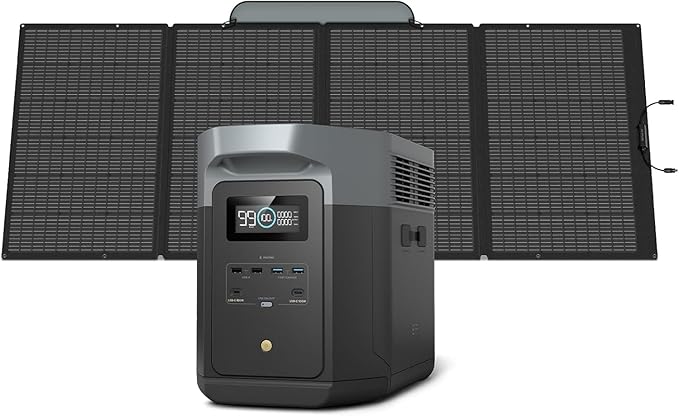
EF ECOFLOW Solar Generator DELTA 2 Max 2048Wh With 400W Solar Panel, LFP Battery Portable Power Station Up to 3400W AC Output Fast Charging 0-80% in 43 Min solar powered generator
- 2048Wh station + 400W bifacial panel
- Complete off-grid solar generator kit
- Charges fully in 3 hours of sunlight
Charge cycles by eMTB battery size
Here's the practical math for jackery 2000 plus emtb charging trailhead planning. Real-world losses between the station's inverter and the bike's charger eat roughly 12–15% of the rated 2,042Wh, leaving you about 1,735–1,800Wh of usable energy per full station charge:
- 500Wh battery (older Bosch PowerTube 500, Shimano BT-E8035): ~3.4–3.6 full charges per station tank.
- 625Wh battery (Bosch PowerTube 625, Specialized SL 320Wh + range extender): ~2.7–2.9 full charges.
- 750Wh battery (Bosch PowerTube 750, Shimano BT-E8036): ~2.3–2.4 full charges.
- 800Wh battery (Bosch PowerTube 800, current Specialized Turbo Levo): ~2.1–2.2 full charges.
Those numbers assume you're starting from a fully-charged station and the bike batteries arrive between 10% and 20% — typical for shuttle riders who pull in to swap. If your group rides harder and arrives at 5%, expect to lose a fractional charge across the day; if they're conservative and arrive at 30%, you'll squeeze a fourth top-off out of the smaller batteries.
Real charge times at the trailhead
Time on the charger matters more than total Wh when you've only got 45 minutes between shuttle laps. Approximate times to refill from 20% to 100% using the OEM charger:
- Bosch Standard Charger (4A): 500Wh in ~2:00, 625Wh in ~2:30, 750Wh in ~3:00.
- Bosch Fast Charger (6A): 750Wh in ~2:00.
- Shimano EC-E6002 (4A): 504Wh in ~2:00, 630Wh in ~2:30.
- Specialized Turbo Connect (12A): 700Wh in ~1:00 — this is the fastest charger in common use and the only one that lets you do a true between-lap refresh.
The Jackery 2000 Plus runs all of these without throttling. If you're shuttling, the only realistic in-day strategy for non-Specialized bikes is a partial top-up: 40 minutes on a Bosch 4A charger adds about 175Wh, or roughly 25–30% on a 625Wh pack. Plan your loop length around that, not around a full charge.
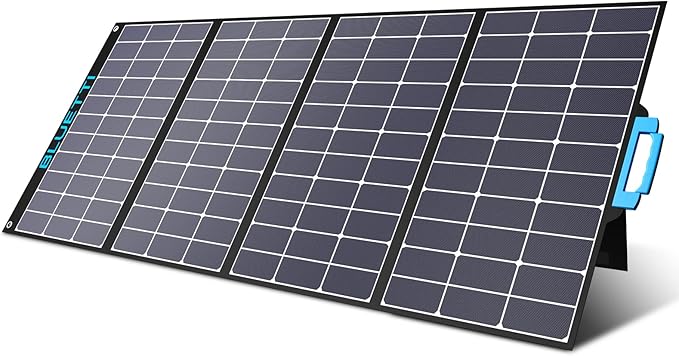
BLUETTI SP350 350W Solar Panel for AC180/AC200L/AC200MAX/AC200P/AC300/EB240 Portable Power Stations with Adjustable Kickstand, Foldable Solar Power Backup for Outdoor Camping,Off G
- 350W high-power monocrystalline cells
- 23.4% conversion efficiency
- ETFE laminated, splash-proof
Solar pairing for multi-day trips
For a base-camp bikepacking trip or a guide running back-to-back days, the 2000 Plus accepts up to 1,400W of solar input through its two DC inputs. Two SolarSaga 200 panels (400W total) will replenish about 1,400Wh on a clear summer day in the western US — enough to cover one full eMTB battery refill plus loss overhead. Four panels (800W) will fully refill the station in roughly 3 hours of strong midday sun, which is the configuration most guides land on after one season of underestimating cloud cover. We dig deeper into panel sizing in our solar pairing guide for the 2000 Plus.
Smaller alternatives if you don't need three full charges
If you're a solo rider doing one lap with a small range-extender battery, or a couple sharing a single charger for an evening top-up at the campsite, the 2000 Plus is overbuilt. Two EcoFlow RIVER stations cover that lighter use case at a fraction of the weight and price.
EcoFlow RIVER 2 Pro — best lightweight trailhead pick
At 716Wh, the RIVER 2 Pro will fully refill one 500Wh eMTB battery with a small reserve, or push a 625Wh pack from 20% to about 90%. Its 800W AC output handles every OEM eMTB charger except the 12A Specialized fast charger, which exceeds the rating. The 70-minute wall-to-full recharge time is its real advantage: if you have shore power at a hotel or campground the night before, it's fully reset in less time than dinner. At ~17 lb it fits behind a truck seat or in a panniers-free hatchback.
Check the EcoFlow RIVER 2 Pro on Amazon
EcoFlow RIVER 2 Max — smallest viable single-charge option
The RIVER 2 Max's 512Wh is right at the edge of usefulness for eMTB charging. It will fully refill a 500Wh pack from empty if you're lucky on losses, or take a 625Wh pack from 20% to about 95%. At 13 lb it's the lightest LiFePO4 station that can do a real eMTB charge, which makes it the right choice for cargo bike or motorcycle-supported trailhead setups where every pound counts. The 1-hour fast charge gets it back to 100% over breakfast.
Check the EcoFlow RIVER 2 Max on Amazon
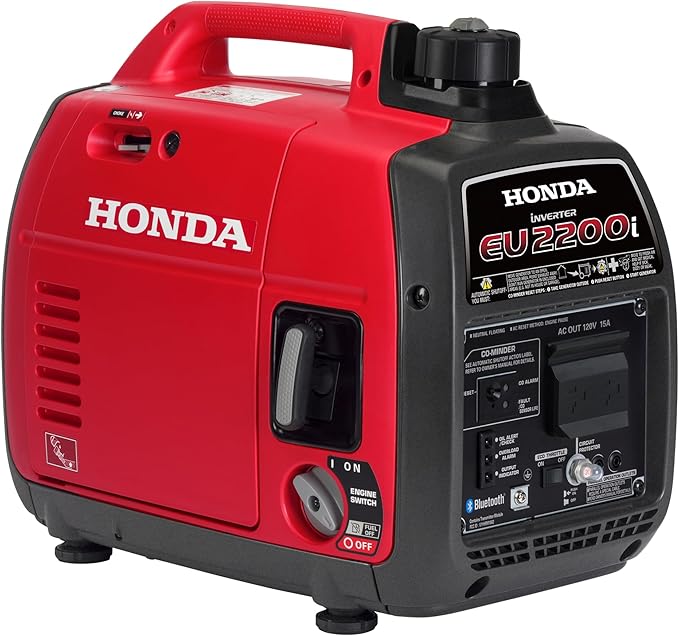
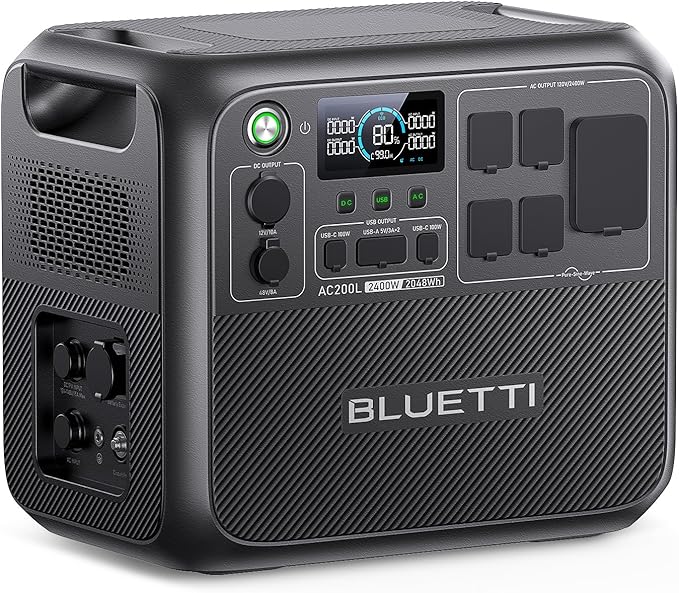
Honda EU2200i 2200-Watt 120-Volt Super Quiet Portable Inverter Generator
- 2200W max / 1800W rated output
- Super quiet 48–57 dB operation
- Runs 4–8.1 hours per tank, 0.95 gal
Comparison: 2000 Plus vs RIVER alternatives for eMTB
| Station | Capacity | AC Output | Full eMTB charges (625Wh) | Weight | Best use case |
|---|---|---|---|---|---|
| Jackery Explorer 2000 Plus | 2,042Wh | 3,000W | ~2.7 | 61.5 lb | Shuttle days, group rides, base camp |
| EcoFlow RIVER 2 Pro | 716Wh | 800W | ~0.9 | 17 lb | Solo overnight, one full top-up |
| EcoFlow RIVER 2 Max | 512Wh | 500W | ~0.7 | 13 lb | Cargo-bike supported, weight-critical |
Trailhead logistics most riders learn the hard way
Heat management
Don't leave the station in direct sun on a black tailgate. LiFePO4 tolerates heat better than NMC, but the inverter throttles above ~104°F internal temperature and shuts off above ~140°F. Park the station in shade under the truck, in a tent vestibule, or under a folding chair. A reflective windshield sun-shade draped over the unit drops surface temperature by 15–20°F in our experience.
Vehicle inverter vs. station
Riders sometimes ask whether they should just run the eMTB charger off the truck's 12V inverter. The math is bad: a 400W vehicle inverter pulls ~35A from the starter battery to deliver 300W to the bike charger, and most starter batteries can't sustain that without idling the engine. The 2000 Plus solves this by letting the engine stay off and the truck stay quiet — important at developed trailheads with idling rules.
Security
A 60-lb station with $1,500 of MSRP is a theft target if left visible at a busy trailhead. The 2000 Plus has a bottom mounting point that works with a long cable lock looped to a roof rack or hitch receiver. Cover it with a tarp or a cheap moving blanket — out of sight defeats 90% of opportunistic theft.
Cold-weather range
LiFePO4 capacity drops about 10–15% at 32°F and the discharge rate may be limited by the BMS below 14°F. For winter fat-bike or snowbike riding, expect ~2 full 625Wh refills instead of 2.7, and pre-warm the station in the cab on the drive in. We cover this in our cold-weather LiFePO4 guide.
Who should skip the 2000 Plus
If you only ride solo, only need one top-up per trip, and weight in the vehicle matters, the RIVER 2 Pro is the better tool. If you're running a guide service with four to six rented eMTBs or a coaching clinic that cycles riders through a single charge station, the 2000 Plus is undersized — look at a 3,000Wh+ unit with the expansion battery option instead. Our eMTB shuttle solar generator roundup covers the larger options.
Frequently Asked Questions
How many eMTB battery charges does a Jackery Explorer 2000 Plus actually deliver?
After inverter and charger losses, expect about 3.4 full charges of a 500Wh battery, 2.7 of a 625Wh battery, 2.3 of a 750Wh battery, and 2.1 of an 800Wh battery, starting from a fully-charged station and arriving at 20% on the bike.
Can the Jackery 2000 Plus charge a Specialized Turbo Levo fast charger at the trailhead?
Yes. The Specialized Turbo Connect 12A fast charger draws about 500W during peak charging, well under the 2000 Plus's 3,000W continuous AC rating. A 700Wh Levo battery refills from 20% to 100% in approximately one hour and uses roughly 670Wh from the station after losses.
Will the 2000 Plus charge two eMTB batteries simultaneously?
Yes. The unit has four AC outlets and can run two OEM eMTB chargers in parallel without throttling. Combined draw rarely exceeds 1,000W even with two 6A Bosch fast chargers, leaving plenty of headroom.
Is it safe to charge an eMTB battery inside a vehicle from the Jackery?
Yes, with caveats. Use a fireproof LiPo charging bag for the bike battery, keep the windows cracked for ventilation, and don't leave it unattended in extreme heat. The station itself is fine inside the cab but the bike battery is the real fire risk, not the LiFePO4 power station.
How long does the 2000 Plus take to recharge from a wall outlet?
Standard mode fills it from 0–100% in about 2 hours via the 1,800W AC input. Emergency Charging mode is faster but is intended for occasional use. From a 12V vehicle outlet, plan on 10+ hours, so use shore power overnight whenever possible.
Can solar panels keep up with eMTB charging during a riding day?
Partially. 400W of solar produces roughly 200–280W net at midday, which keeps pace with one Bosch 4A charger drawing about 230W. Two chargers running simultaneously will deplete the station faster than the panels can replenish, so use solar for between-lap recovery, not real-time supply.
Does the 2000 Plus expansion battery make sense for eMTB use?
For shuttle guides and clinic operators, yes — one expansion battery roughly doubles capacity to about 4,084Wh, enough to fully refill six 625Wh batteries in a day. For solo and small-group riders, the cost and weight of the expansion battery aren't justified, and a second smaller station gives you redundancy instead.
Key Takeaways
- Choosing the right jackery 2000 plus emtb charging trailhead means matching capacity and output ports to your actual devices
- Always check actual watt-hours (Wh), not just watts — runtime depends on Wh, not peak output
- Also covers: jackery 2000 plus ebike battery
- Also covers: explorer 2000 plus mtb shuttle
- Also covers: jackery 2000 plus bosch battery
- Compare price-per-Wh across models to find the best value for your budget