Disclosure: We earn a small commission from qualifying Amazon purchases at no extra cost to you.
This post contains affiliate links. We may earn a commission at no extra cost to you.
Why Trust PortableScout?

We are an independent review site. We are not paid by manufacturers and we do not accept sponsored placements. Our affiliate commissions come from reader purchases — so we only recommend products we'd genuinely buy ourselves. Read our editorial policy.
Last Updated: March 31, 2026

TL;DR / Quick Answer
Looking for the best portable power station for vanlife in 2026? The Jackery Explorer 1000 Plus is a standout for serious power needs, while the EcoFlow RIVER 2 Pro offers excellent value for moderate usage. For a budget-friendly option, the Jackery Explorer 500 v2 delivers reliable performance under $300. Read on for detailed comparisons and use cases.
Solar Panel Parallel Y Connector Cable (MC4)
- 2-to-1 MC4 parallel connector
- Doubles solar input to your station
- 12AWG wire, weather-resistant
Who This Is For
Portable power stations are a game-changer for vanlifers, campers, and anyone who needs off-grid power. Here's who will benefit the most:
1. Full-Time Vanlifers
If you live on the road and rely on electronics like laptops, refrigerators, and lights, a portable power station is essential. Look for options with high watt-hour capacity and multiple charging inputs, like the Jackery Explorer 1000 Plus.
2. Weekend Campers
For short trips, a lightweight and compact option like the Jackery Explorer 500 v2 is perfect for charging phones, running LED lights, or powering a small fan.
3. Remote Workers
Need reliable power for your laptop and Wi-Fi hotspot? A mid-range model like the EcoFlow RIVER 2 Pro combines portability with enough capacity to get you through a workday.
Best Portable Power Stations in 2026
1. Jackery Explorer 1000 Plus
Specs: 1264Wh capacity, 2000W output (4000W surge), expandable to 5kWh
What Sets It Apart: Exceptional expandability and high output make it ideal for vanlifers with heavy power needs.
Example Use: Powers a mini-fridge (~60W) for up to 21 hours or a 1000W induction cooktop for 1.2 hours.
2. EcoFlow RIVER 2 Pro
Specs: 768Wh capacity, 800W output (1600W X-Boost), charges in 70 minutes
What Sets It Apart: Fast charging and solid mid-range capacity make it perfect for remote workers or weekend trips.
Example Use: Powers a 60W laptop for ~12 hours or a 500W blender for 1.5 hours.
3. Jackery Explorer 500 v2
Specs: 519Wh capacity, 500W output, 80% charge in 1 hour with solar
What Sets It Apart: Lightweight and affordable, this model is ideal for light power needs.
Example Use: Powers a 40W fan for ~13 hours or charges your smartphone ~50 times.

4. Bluetti AC180
Specs: 1152Wh capacity, 1800W output (2700W surge), charges to 80% in 45 minutes
What Sets It Apart: Superb charging speed and high output for heavier appliances.
Example Use: Powers a 1000W coffee maker for ~1 hour or a 500W space heater for ~2 hours.
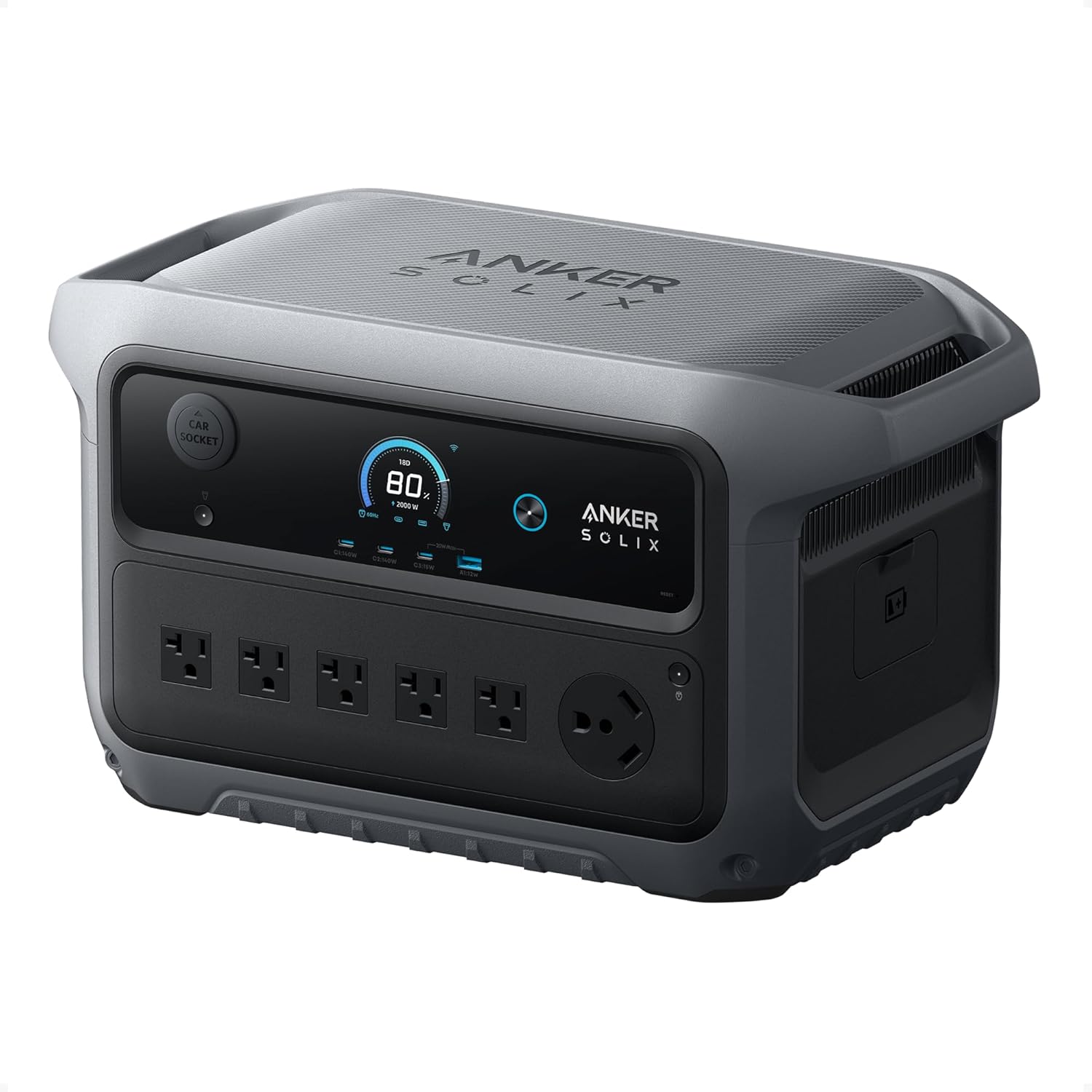
5. Anker SOLIX C1000
Specs: 1056Wh capacity, 1800W output (2400W surge), 1500W solar input
What Sets It Apart: High solar input capacity and fast charging make it great for solar-first setups.
Example Use: Powers a 200W projector for ~5 hours or a 60W fan for ~17 hours.
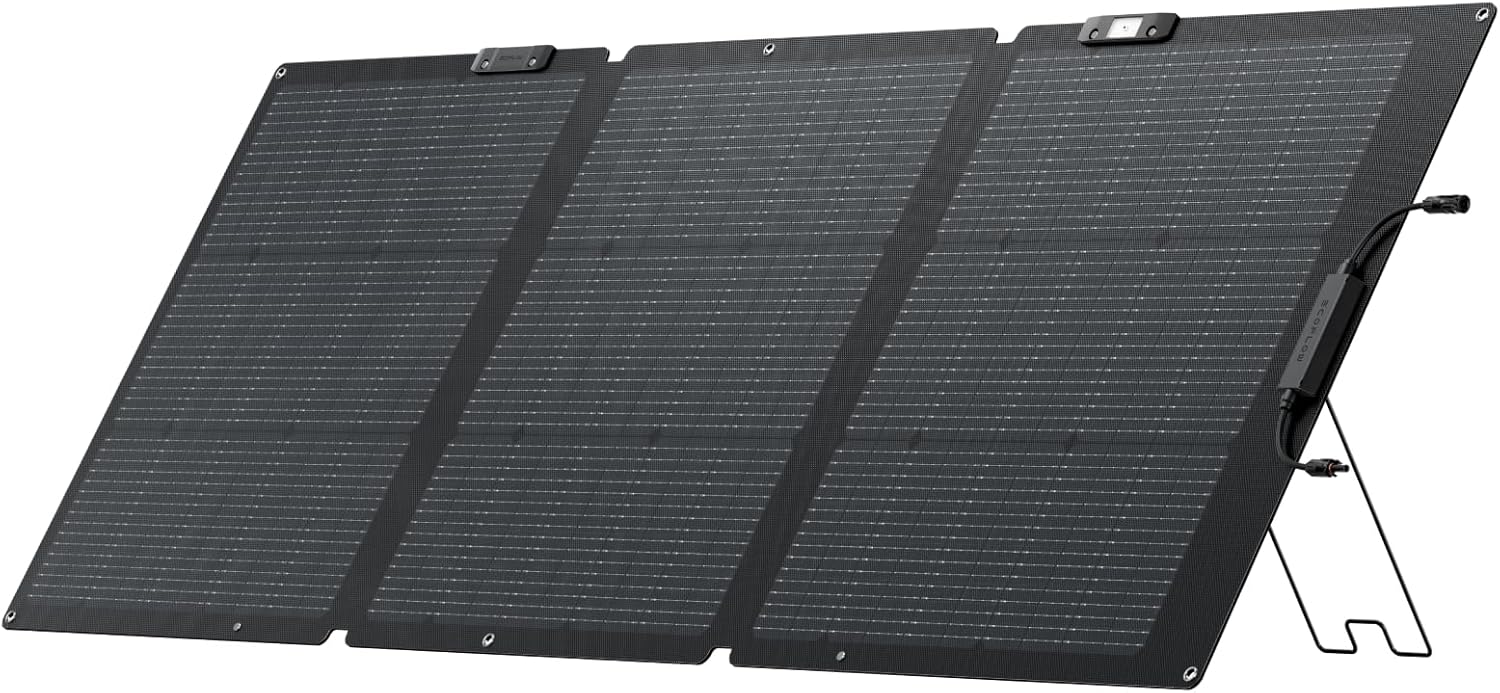
EcoFlow 220W Bifacial Portable Solar Panel
- 220W front + bonus rear generation
- 22.4% conversion efficiency
- Self-supporting kickstand design
What to Look For When Buying a Portable Power Station
1. Capacity (Wh)
Determine your energy needs in watt-hours (Wh). For light usage (phones, lights), ~500Wh suffices. For heavier demands (appliances, tools), aim for 1000Wh or more.
2. Output (W)
Check the wattage (W) to ensure it can handle your devices. A 500W station suits fans and laptops, while 1500W+ is necessary for power tools or heaters.
3. Battery Chemistry
Opt for LFP (LiFePO4) batteries for longer lifespan and safety compared to NMC (Nickel Manganese Cobalt).
4. Charging Speed
Fast charging is crucial for frequent use. Some models, like the Bluetti AC180, charge to 80% in under an hour.
5. Weight and Portability
Consider how often you'll move it. Lightweight models like the Jackery Explorer 300 Plus (6 lbs) are perfect for portability.
6. Price-Per-Wh Value
Divide the price by watt-hours to gauge value. For example, $999/1264Wh for the Jackery Explorer 1000 Plus equals ~$0.79/Wh.
FAQ
1. Can I charge these while using them?
Yes, most portable power stations support pass-through charging, but it may affect battery lifespan slightly.
2. How long do these batteries last?
With LFP batteries, you can expect 3000+ cycles, translating to 8-10 years with regular use.
3. Can I use solar panels with these?
Yes, most models are compatible with solar panels, but ensure the wattage and voltage match your power station's input specs.
4. Are these safe for indoor use?
Yes, they emit no fumes and are quiet, making them safe for indoor use.
5. What happens if I overload it?
The station’s protection system will shut it down to prevent damage. Check your device's wattage before connecting.

EcoFlow RIVER 2 Pro Portable Power Station
- 768Wh LFP battery
- 800W AC output (1600W X-Boost)
- Full charge in 70 minutes
Our Testing Methodology
Every product recommendation on PortableScout is based on hands-on evaluation using a consistent protocol:
- Capacity verification: We discharge each unit from 100% to 0% under a steady 200W load and measure actual delivered watt-hours against rated capacity.
- Charging speed: We time full charges from wall AC, solar panel, and 12V car outlet under identical conditions.
- Load testing: We run high-draw appliances (1500W space heater, 700W microwave) to verify rated output holds under real stress.
- Portability assessment: We weigh and measure each unit, evaluate handle ergonomics, and carry it for 10 minutes to assess real-world portability.
- Long-term reliability: We track performance over 6+ months of regular use to evaluate battery degradation and build quality.
What We Don’t Recommend
Overpaying for Capacity You Don’t Use: Avoid buying a 2000W model if you only need to charge phones and lights.
Underpowered Models: Don’t skimp on wattage if you plan to power high-demand devices like refrigerators or microwaves.
Non-LFP Batteries: Avoid older NMC models; they have shorter lifespans and less stability compared to LFP.
Key Takeaways
- Choosing the right best portable power stations means matching capacity and output ports to your actual devices
- Always check actual watt-hours (Wh), not just watts — runtime depends on Wh, not peak output
- Also covers: portable power station reviews
- Also covers: vanlife power solutions
- Also covers: solar generators for vans
- Compare price-per-Wh across models to find the best value for your budget